Introduction
If you have ever wondered what is the history of pop music, you are not alone. Pop music is one of the most influential and widely enjoyed music genres in the world. From catchy melodies and memorable lyrics to global superstars and record-breaking albums, pop music has shaped cultures, inspired generations, and connected people across countries.
The word “pop” comes from “popular,” meaning music that appeals to a wide audience. Unlike genres that focus on a specific style or tradition, pop music changes with time. It borrows ideas from rock, jazz, blues, R&B, hip-hop, electronic music, and even classical music. This flexibility has helped it remain relevant for decades.
Today, pop music dominates streaming platforms, radio stations, concerts, and social media. However, its journey began long before digital technology. Understanding what is the history of pop music helps us appreciate how this genre evolved into the global phenomenon it is today.
The Origins of Pop Music
The roots of pop music can be traced back to the late 19th and early 20th centuries. During this period, popular songs were performed in theaters, music halls, and public gatherings. These songs were designed to entertain large audiences and were often simple enough for people to sing along.
As technology improved, phonograph records and radio broadcasts allowed music to reach millions of listeners. This marked the beginning of the music industry as we know it today.
Several genres influenced early pop music, including:
- Jazz
- Blues
- Gospel
- Country
- Folk
These styles laid the foundation for modern pop music by introducing catchy rhythms, emotional storytelling, and memorable melodies.
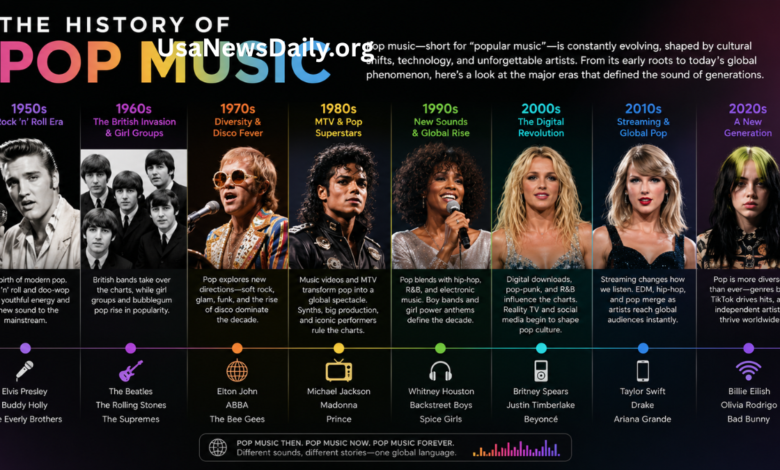
The Evolution of Pop Music Through the Decades
1950s: The Birth of Modern Pop
The 1950s marked the beginning of modern pop music. Rock and roll became extremely popular, blending rhythm and blues with country influences.
Artists during this era introduced energetic performances and youth-oriented music. Radio stations played popular songs daily, making music more accessible than ever before.
Key Features
- Simple song structures
- Catchy choruses
- Dance-friendly rhythms
- Growing teenage audience
1960s: The British Invasion
The 1960s transformed pop music forever. Bands from the United Kingdom gained worldwide popularity and influenced countless musicians.
Songwriting became more creative, while recording technology improved significantly. Pop music expanded beyond romance and began addressing social issues, personal experiences, and cultural changes.
Popular Trends
- Harmonized vocals
- Creative songwriting
- Experimental instruments
- International fan culture
1970s: Diversity and Innovation
During the 1970s, pop music became more diverse than ever before. Artists mixed pop with disco, funk, rock, and soul to create exciting new sounds.
The disco movement introduced energetic beats that dominated dance floors around the world. At the same time, improved recording studios allowed producers to experiment with richer sound quality.
Characteristics
- Dance rhythms
- Rich orchestration
- Studio experimentation
- Worldwide popularity
1980s: The MTV Revolution
The launch of music television completely changed the music industry. Artists now needed memorable music videos in addition to great songs.
Fashion, choreography, and visual storytelling became essential parts of an artist’s success. Electronic instruments and synthesizers also became common in pop production.
Major Changes
- Music videos
- Digital recording
- Synthesizers
- Global celebrity culture
1990s: Pop Becomes Global
The 1990s introduced a new generation of singers, boy bands, and girl groups. Record labels invested heavily in talented young artists, creating international superstars.
Pop music also blended with hip-hop and R&B, producing fresh sounds that appealed to wider audiences.
Popular Styles
- Dance-pop
- Teen pop
- Pop rock
- R&B pop
2000s: The Digital Era
The internet completely changed how people discovered music.
Instead of buying CDs, listeners began downloading songs and later using streaming services. Social media also helped artists connect directly with fans around the world.
Digital production software made creating professional-quality music easier and more affordable.
Key Developments
- Online music stores
- Streaming platforms
- Social media promotion
- Digital production
2010s to Today: Streaming and Global Influence
Modern pop music is more international than ever before. Artists collaborate across countries and languages, creating worldwide hits.
Streaming services use algorithms to recommend songs, helping new artists reach global audiences quickly.
Today’s pop music combines influences from:
- Hip-hop
- EDM
- Latin music
- Afrobeats
- K-pop
- Indie music
Characteristics of Pop Music
Although pop music constantly evolves, several characteristics remain consistent.
| Feature | Description |
| Catchy melodies | Easy to remember tunes |
| Simple lyrics | Clear and relatable messages |
| Repeated chorus | Makes songs memorable |
| Short song length | Usually 3–4 minutes |
| High production quality | Professional recording and mixing |
| Broad appeal | Suitable for diverse audiences |
Technology’s Impact on Pop Music
Technology has played a massive role in shaping pop music.
Recording Technology
Better microphones and digital recording have dramatically improved sound quality.
Streaming Services
Platforms allow listeners to discover millions of songs instantly.
Social Media
Artists build fan communities through short videos, live streams, and direct interaction.
Artificial Intelligence
AI now assists with music recommendations, production tools, and audience analysis.
Pop Music vs Other Genres
| Genre | Main Focus | Typical Audience |
| Pop | Wide appeal | Everyone |
| Rock | Guitars and live performance | Rock fans |
| Hip-Hop | Rap and rhythm | Urban audiences |
| Jazz | Improvisation | Music enthusiasts |
| Country | Storytelling | Country listeners |
Why Pop Music Is So Popular
Pop music remains successful because it constantly adapts to changing tastes.
Reasons include:
- Easy to understand
- Catchy melodies
- Emotional lyrics
- Global accessibility
- Strong marketing
- Wide variety of styles
These qualities help pop music remain relevant across generations.
How Pop Music Has Influenced Society
Pop music has shaped fashion, language, dance, entertainment, and even social movements.
Its influence can be seen in:
- Movies
- Television
- Advertising
- Sports events
- Social media trends
- Cultural celebrations
Artists often use their platforms to raise awareness about important global issues, making pop music more than just entertainment.
Major Milestones in Pop Music History
| Year | Event |
| Early 1900s | Popular songs spread through sheet music |
| 1920s | Radio becomes mainstream |
| 1950s | Modern pop music emerges |
| 1960s | British Invasion expands pop globally |
| 1980s | MTV transforms artist promotion |
| 2000s | Digital downloads replace CDs |
| 2010s | Streaming dominates music industry |
| Today | Global collaborations define modern pop |
FAQs
What is the history of pop music?
The history of pop music begins in the early 20th century and evolved through influences from jazz, blues, rock, disco, hip-hop, and electronic music into today’s globally popular genre.
Why is it called pop music?
The word “pop” is short for “popular,” meaning music created to appeal to a broad audience.
When did pop music become popular?
Modern pop music gained worldwide popularity during the 1950s with the rise of radio, television, and rock and roll.
What makes pop music different?
Pop music focuses on catchy melodies, simple lyrics, memorable choruses, and broad commercial appeal.
Is pop music still evolving?
Yes. Pop music continuously changes by adopting new technologies, production techniques, and influences from other genres around the world.
Conclusion
Understanding what is the history of pop music reveals how this genre has continuously evolved alongside society, culture, and technology. From its early roots in jazz, blues, and folk traditions to today’s streaming-driven global hits, pop music has remained adaptable and influential. Every decade has introduced new sounds, production techniques, and artistic styles, allowing pop music to stay fresh while reaching audiences of all ages.
As technology continues to transform the music industry, pop music will likely keep evolving in exciting ways. New artists, digital innovations, and international collaborations ensure that the genre remains one of the most dynamic forms of entertainment. Whether you enjoy classic hits or today’s chart-topping songs, exploring the history of pop music offers a deeper appreciation for the creativity and cultural impact behind every generation of popular music.